Nerikiri Wagashi: "Tsubaki" (Camellia). It's one of indispensable flowers for decorating "Cha-shitsu";a traditional Japanese tea rooms. Try to make "Tsubaki flowers" with Nerikiri and Kuro-an. liarra Great recipe for Nerikiri Wagashi: "Tsubaki" (Camellia). "Tsubaki" (Camellia) is a flower early spring. It's one of indispensable flowers for decorating "Cha-shitsu";a traditional Japanese tea rooms.
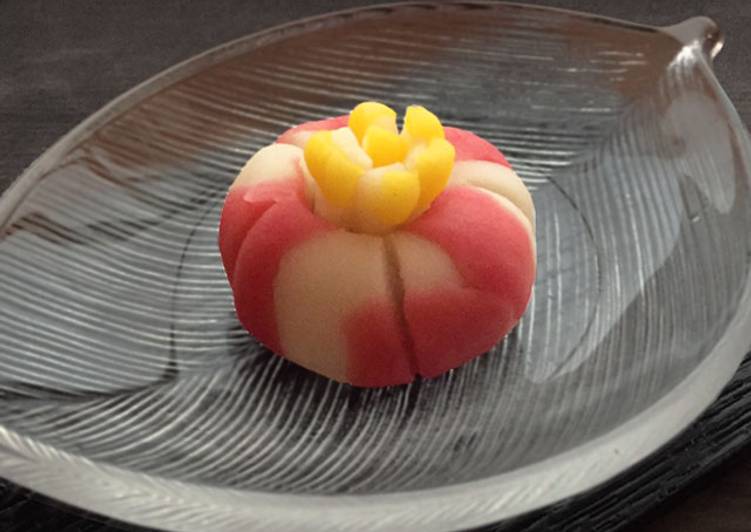 Try to make "Tsubaki flowers" with Nerikiri and Kuro-an.
Tsubaki (椿) Camellia Cake Treats. the food looks like flower.
Uruwashi no Camellia うるわしのカメリア "Beautiful Camellia" Tsubaki Factory [ tsubaki factory Joshuu Tsubaki (Female Prisoner Tsubaki) Tsubaki is one of the prisoners in a all-female prison.
Vous pouvez avoir Nerikiri Wagashi: "Tsubaki" (Camellia) using 4 ingrédients et 11 pas. Voici comment cuisiner ça.
Try to make "Tsubaki flowers" with Nerikiri and Kuro-an.
Tsubaki (椿) Camellia Cake Treats. the food looks like flower.
Uruwashi no Camellia うるわしのカメリア "Beautiful Camellia" Tsubaki Factory [ tsubaki factory Joshuu Tsubaki (Female Prisoner Tsubaki) Tsubaki is one of the prisoners in a all-female prison.
Vous pouvez avoir Nerikiri Wagashi: "Tsubaki" (Camellia) using 4 ingrédients et 11 pas. Voici comment cuisiner ça.
Ingrédients de Nerikiri Wagashi: "Tsubaki" (Camellia)
- C'est 10 g de Koshi-an (pâte d‘haricots rouges sacrée).
- Préparez 20 g de Nerikiri pâte.
- C'est de Veuillez trouver mon recette <<"Pâte pour"Nerikiri Wagashi (des confiseries traditionnelles japonaises)>>.
- Vous avez besoin de + Colorant alimentaires.
Nerikiri Wagashi: "Tsubaki" (Camellia) - Étape par étape. Sweet soften Mochi cake - Camellia Nerikiri is one of traditional Japanese sweet desserts (wagashi), served in Japanese tea ceremony as well as in modern Japanese kitchen. Using Nerikiri dough which is made from beans, rice flour and sugar, it is usually designed in the shape of seasonal and natural objects such as flowers and tee leaves. This delicate sweet has red bean paste wrapped in steamed domyoji rice powder which has been mixed with sugar and simmered in water.
Nerikiri Wagashi: "Tsubaki" (Camellia) étape par étape
- Ingrédients pour 1.
- Ustensiles.
- Pétrir cette Nerikiri pâte bien. La partager en chaque pièce..
- Coloriser une petite pièce pour des étamines jaune..
- Coloriser une petite pièce pour des pétales rouge..
- (Toutes les pièces sont complètes).
- Faire des pétales. Faire la pâte blanche cercle. Partager la pâte rouge en 7 ou 8 et les mettre sure la pâte blanche. Envelopper une pâte d‘haricots rouges avec elle..
- Faire 5 fosses de bas à haut. (La partager en 5 égal).
- L'écraser un peu. Faire une cavité ronde dans le centre..
- Faire des étamines. Faire la pâte blanche rectangle et la pâte jaune bande. Les joindre. Faire des incisions. La retourner et rouler..
- Mettre la pièce étamines sur le centre de le fleur..
Unlike the spring-time sakura (cherry)-domyoji, camellia leaves used for this confectionary are not edible. In my previous post, I explained how to make nerikiri, a combination of sweet white bean paste (shiro-an) and rice flour (shiratamako) that is the basis for a whole category of traditional Japanese sweets. Once you get the hang of neriki, this camellia blossom wagashi is a cinch to make. Nerikiri dough is made from white kidney bean paste (Shiro-An) and soft Mochi (Gyuhi). Easy to mold it into various shapes such as flowers, leaves and many different artistic shapes.