Bibimbap. Bibimbap (BEE-beem-bop): One of the most popular dishes in Korean cuisine, bibimbap is a nutritious rice dish of steamed rice and pre-cooked vegetables (usually spinach, bean sprouts, carrots. Bibimbap - Trust the Koreans to transform the humble rice bowl into a recipe that's revered all around the world! With a kaleidoscope of seasoned sautéed vegetables, Korean marinated beef, and the signature fried egg, the thing that really seals the deal is the bright red, spicy Bibimbap Sauce that I can't get enough of.
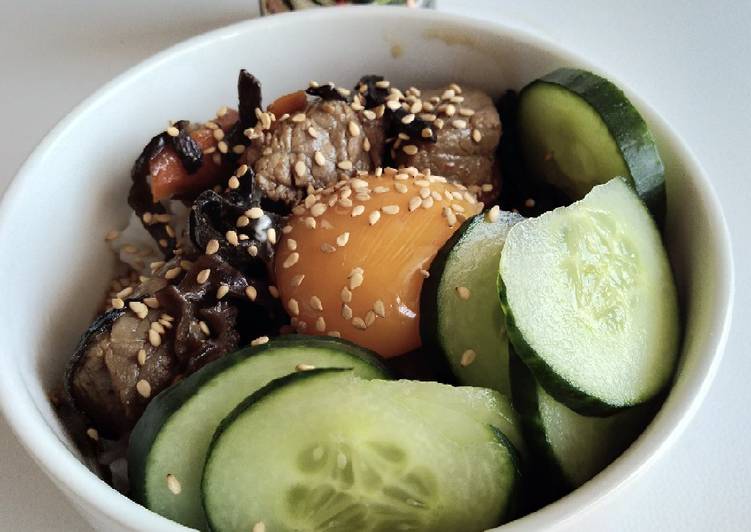 The term "bibim" means mixing various ingredients, while the "bap" noun refers to rice.
Bibimbap is served as a bowl of warm white rice topped with namul (sautéed and seasoned vegetables) or kimchi.
Along with kimchi, bibimbap takes its place among the favored foods in Korean cuisine.
Vous pouvez cuisiner Bibimbap using 15 ingrédients et 4 pas. Voici comment cuisiner que.
The term "bibim" means mixing various ingredients, while the "bap" noun refers to rice.
Bibimbap is served as a bowl of warm white rice topped with namul (sautéed and seasoned vegetables) or kimchi.
Along with kimchi, bibimbap takes its place among the favored foods in Korean cuisine.
Vous pouvez cuisiner Bibimbap using 15 ingrédients et 4 pas. Voici comment cuisiner que.
Ingrédients de Bibimbap
- C'est 200 g de faux filet.
- C'est 2 gousses de d'ail.
- Préparez 4 de oeufs.
- Préparez 1 de concombre.
- Préparez 2 de carottes.
- C'est 2 de pommes de terre.
- Vous avez besoin 8 de cuillères a soupe de sauce soja salée.
- Préparez 2 de cuillères a soupe de miel liquide.
- Préparez 1 de cuillères a soupe d'huile de sésame.
- Préparez 2 de poignées de champignons noirs.
- Préparez de Sel.
- Vous avez besoin de Poivre.
- C'est de Graines de sésame.
- Vous avez besoin de Pousses de soja (facultatif).
- C'est de Riz Basmati pour 4 personne.
Literally meaning 'mixed rice,' it's a popular meal consisting of white rice topped with vegetables, beef, a whole egg, and gochujang (red chili pepper paste). Bibimbap (비빔밥) is a large bowl of rice topped with an array of individually prepared vegetables and meat and served with a gochujang (고추장) sauce. Bibim means mixing, and bap means rice. The mixing usually happens at the table by the diner.
Bibimbap instructions
- Préparez la marinade en mélangeant tous les ingrédients. Coupez le boeuf finement, mélangez-le avec la marinade, mettez de côté..
- Épluchez les pommes de terre et les carottes. Râpez-les grossièrement. Coupez le concombre en tranches. Coupez les champignons noirs en quatre. Cassez les oeufs, récupérez le jaune dans une demi-coquille, sans le percer. L'opération est plus facile à faire avec des œufs bien froids..
- Dans une poêle ou dans un wok, faire sauter les pommes de terre et les carottes salées et poivrées avec un peu d'huile pendant 7 à 8 min, puis mettez de côté. Faire ensuite sauter les champignons de la même manière puis les germes de soja..
- Répartissez le riz dans des bols. Déposez côte a cote le mélange pomme de terre, carottes, puis le concombre, les champignons, le soja et le boeuf sauté rapidement dans la poêle. Parsemez de graines de sésame et arrosez d'huile de sésame. Déposez au centre le jaune d'œuf cru.
Bibimbap simply translates to "mixed rice with meat and assorted vegetables". You can make endless variations to this dish depending on your preference and dietary requirements (e.g. microgreens bibimbap) and also based on the dish/bowl it is served in (e.g. dolsot bibimbap and yangpun bibimbap). Today's recipe is bibimbap, a super-popular Korean dish you might have heard about already! It's made of a bowl of rice, sautéed and seasoned vegetables (namul: 나물), a bit of hot pepper paste (gochujang: 고추장), and usually a bit of seasoned raw beef, too (yukhoe: 육회). Bibim (비빔) translates as "mixed," and bap (밥) means "cooked rice," so bibimbap literally means.